
News
BU School of Social Work, CADER, and BU Sargent College Partner to Launch Innovative Home-based Assessment Certificate Program
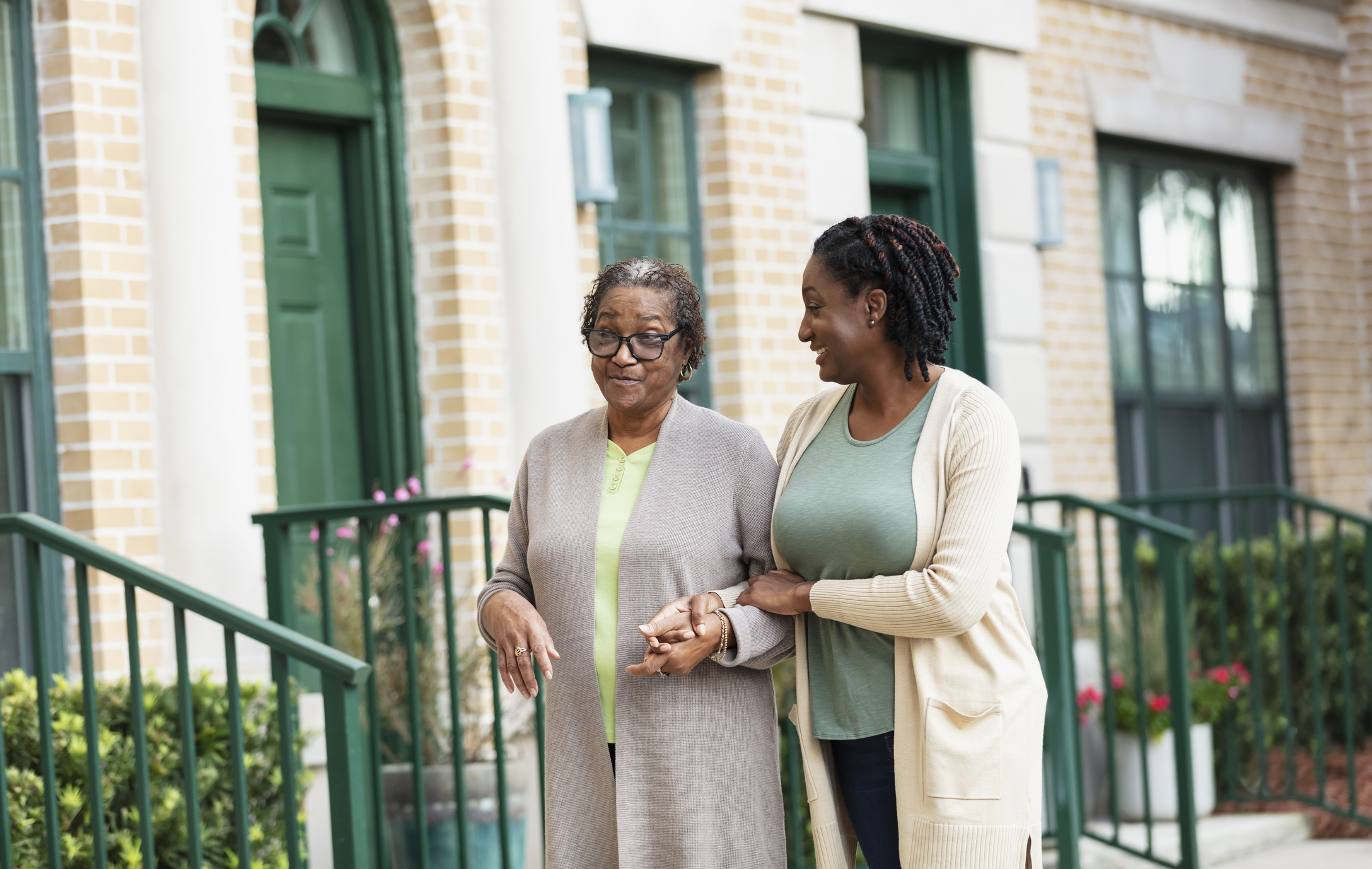
Home visits are a crucial facet of health and social service professionals’ roles. By visiting people in their homes, practitioners can identify safety and accessibility concerns to provide better care, particularly for people who are isolated or homebound. While it’s essential that staff in various domains receive training to conduct home visits and assessments, such training often falls to individual agencies, leading to varying degrees of quality and depth. Additionally, many graduate students do not receive home assessment training in their coursework to prepare them for their practicum internships or careers.
To address this gap, the Center for Aging and Disability Education and Research (CADER), BU School of Social Work (BUSSW), and BU Sargent College of Health and Rehabilitation Sciences (Sargent) recently launched the new Effective Strategies for Home-based Assessment Certificate Program, available online to all health and human service professionals.
Using Technology to Simulate Learning Environments
The certificate program originated from the innovative interprofessional Home Safety Training Project, funded by The Shipley Center at BU, based on multiple pilot studies that included BUSSW, Sargent, and BU School of Medicine students. A convergent research initiative between BUSSW and Sargent, the project used data from the studies to help students learn how to conduct ethical and person-centered home assessments using an interactive online learning platform that features simulations with artificial intelligence (AI) tools, chatbots, and 360 experiences.
“The idea was to utilize technology to help enhance practice and learning of home-based work, but without necessarily having to be in the home. In-home training can be difficult to access,” said Professor Jordana Muroff, BUSSW professor and chair of clinical practice. “Additionally, learners want to be able to try different approaches, but that might not be the best for the resident as students try to learn and grow and make mistakes as they think through different approaches.”
Collaboration Creates Innovative Approach
The project was born from a close partnership between BUSSW and Sargent faculty. The program tapped into the cutting-edge work in interprofessional education and online innovation from Professor Craig Slater, Sargent College clinical associate professor and director for interprofessional education and practice, and Professor Karen Jacobs, clinical professor, program director, and post-professional doctorate in the occupational therapy program at Sargent College. It also leveraged Professor Muroff’s research and practice expertise in home-based work with hoarding and technology-supported approaches, and Professor Bronwyn Keefe’s deep experience in aging research and workforce development as director of CADER and assistant dean of workforce and professional development at BUSSW.
“This partnership perfectly exemplifies interprofessional collaboration and convergence at BU where our two schools worked together in a meaningful way, each bringing different strengths and expertise to the table,” said Keefe. Several research assistants from BUSSW and Sargent also helped develop aspects of the simulations, guided by BUSSW doctoral student Megan Nizza.
Person-Centered, Ethical Training
The Home-Safety Training project took a person-centered approach to home assessments that ensured that students were well-versed in important cultural considerations and ethical practices. Students practiced performing home assessments related to their discipline and were encouraged to identify potential concerns and make recommendations. They were also asked to notice aspects of the simulated home that might help facilitate the client’s specific goals and values – what aspects of the environment are helpful, and how can the home setting facilitate connection and rapport between the client and the provider?
Jacobs said, “Using innovative technologies such as AI chatbots and 360° simulations, we recreated home environments in an immersive, low‑risk format that let students practice interactions, test approaches, and reflect before entering actual homes. These tools support students in identifying both risks and strengths which promote autonomy, and help them maintain relationships, and engage in meaningful occupations.”
The Home-Safety Training’s virtual scenarios were built carefully to ensure they would be relevant to all the students who came from a diversity of backgrounds, including nutrition, social work, medicine, occupational therapy, and more.
“We spent a lot of time creating multiple scenarios that focus on a child and family, as well as older adult individuals and a couple. These scenarios include many intersecting health and interpersonal challenges,” Muroff noted.
Revealing Results
Students reported that they were able to test new strategies and identify appropriate interventions by going through the scenarios at their own pace. Even students who had previous experience in home-based care discovered new strategies. And because the scenarios were designed with an interprofessional approach, students gained a better awareness of other roles beyond their own realm of expertise and learned how to make appropriate referrals for different types of care.
“Our goal was to create learning experiences that prepare students for home-based practice, which allowed them to experiment, collaborate, and reflect together. When students from different health professions learn with, from, and about each other, teamwork becomes a central part of practice rather than an afterthought,” Slater said.
With the completion of two pilots and a third in progress, students reported that the program had a significant impact on their ability to conduct home assessments.
- 94% of students agreed that the training expanded their understanding of home-based assessments.
- 92% agreed that the program will help them apply new skills in home assessments.
- Students say following the program, they have an increased interest in home-based and interprofessional practice.
New Training Program Launches
Following the success of the pilot studies at BU, the CADER team adapted the training into an online, asynchronous, self-paced certificate program for the broader workforce of health and social service providers and agencies across the country. This new certificate program translates classroom learning into practical, evidence-informed skills for conducting home assessments.
“We hope that, as we roll out this certificate program to community-based agencies, it will be another tool in their toolkit for onboarding new staff,” said Keefe. “Agencies will now have access to an innovative online curriculum to help people really understand what it means to enter someone’s home and conduct person-centered assessments.”
“This entire project stemmed from particular interests, needs, and requests from the community,” Muroff said. “Not only did we want to provide better training to students as future members of the workforce, we also want to support the learning of the current workforce as well – for people at all stages of their careers.”
The Home-Safety Training Project is generously funded by the Shipley Center Academic Innovation Fund.