
News
CADER Partners with the University of Vermont to Develop Custom Training in Aging
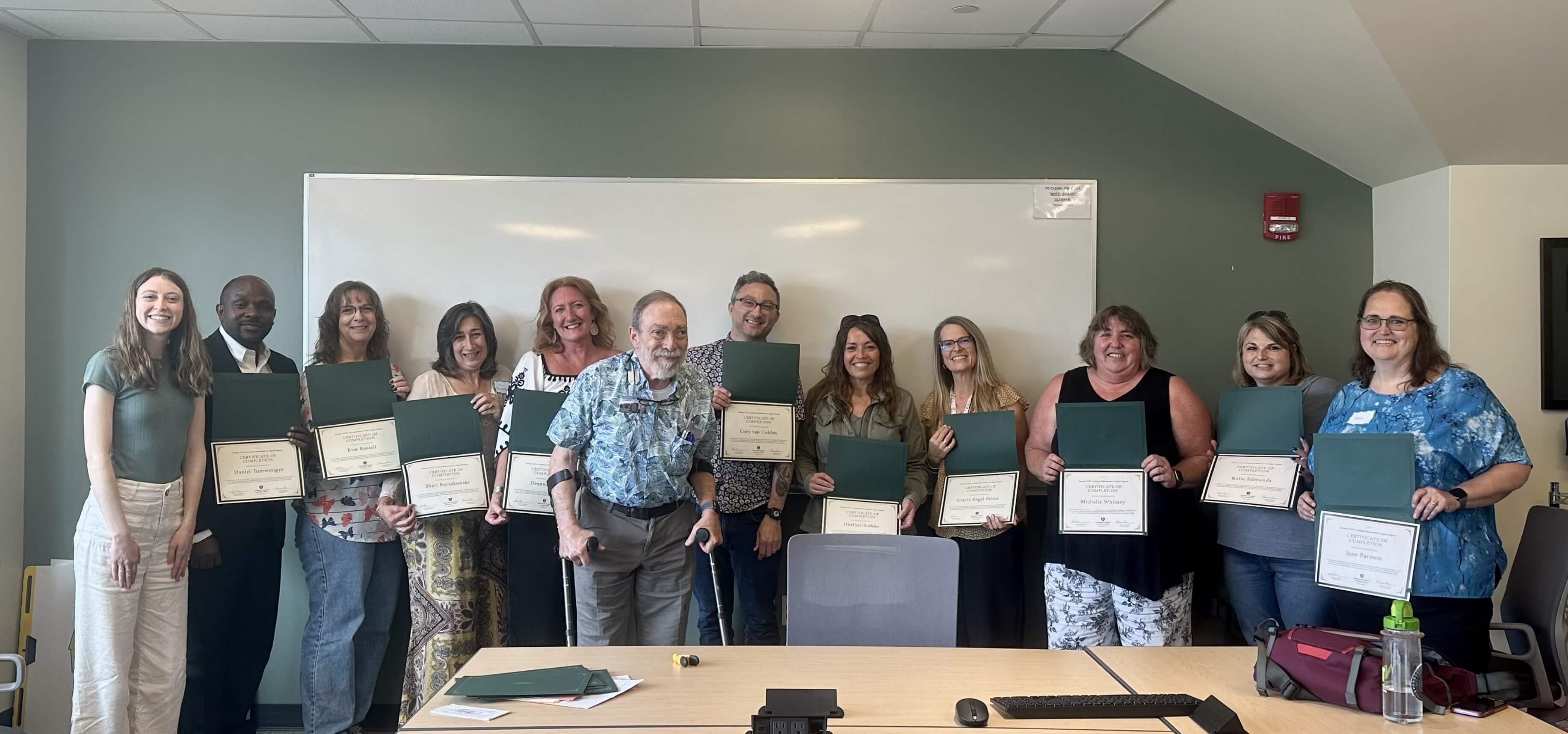
When the Center on Aging at the University of Vermont (UVM), the UVM Department of Social Work, and the Dementia Family Caregiver Center (DFCC) at UVM Medical Center conducted a study on social workers in the field of aging, the research team found a need for more gerontological training, reflecting overall national trends that show there is a need for more support in aging care to prevent burnout and improve care. To meet this need, UVM partnered with the Center for Aging and Disability Education and Research (CADER) at Boston University School of Social Work (BUSSW) to develop the Vermont Learning Enhancement in Aging Program (LEAP), a custom training certificate to strengthen the age-friendly workforce in Vermont’s rural communities.
“Knowing that our population is growing older, and especially quickly in Vermont, there will be more and more need for skilled, well-trained professionals,” said Marissa Birne, associate director of education at the Center on Aging at UVM Larner College of Medicine. “Part of responding to that need is making sure that those health and social service professionals who are already working in the field of aging have the education and support they need to feel motivated and confident staying in that field.”
Online, Self-Paced Training Expands Access
Vermont LEAP is online and fully self-paced. Designed by CADER, the program includes five courses that cover key issues in aging and disability, including Alzheimer’s disease and other dementias, mental health and aging, suicide prevention, and more.
“Even those learners who have been working in their roles for years may not have had more focused training on topics like mental health and aging, suicide prevention, or even Alzheimer’s and dementia,” Birne said. “I think these gerontology-specific trainings are beneficial not only to professionals just entering the field, but also to those who have been doing this work for a long time.”
CADER’s self-paced, online certificate is especially important to rural Vermont health and human services professionals, as in-person training can be challenging. While allowing learners to complete coursework from any location, it also fits perfectly into their busy work schedule, which might not always fall within the traditional nine-to-five window.
“CADER makes the learning feel accessible and allows us to extend this opportunity to those who might not previously have had access to this kind of professional development opportunity,” Birne said.
Following each of the five courses, UVM’s Center on Aging team brings learners together for a 75-minute Zoom session that offers a deeper dive into the course content. Participants exchange personal reflections on both their learning and their work experiences.
“It’s a time to share situations that are coming up in our own work as we’re thinking about the modules, and an opportunity to learn from each other how we might approach some of those situations,” Birne said.
Revealing Results
In addition to designing the online certificate program, CADER also analyzed and provided a full program evaluation report following the completion of the pilot cohort.
“It has been really empowering to see how this training has played a role in keeping some of the learners in the field,” Birne said.
According to the CADER evaluation:
- 100% of the participants reported that, upon completing the certificate program, they were either very or extremely likely to continue working in the field of aging.
- 93% of learners felt very or extremely confident working with older adults after taking the training, compared to 62% of learners who felt very or extremely confident prior to completing the training.
- 100% of learners stated that it will improve their work with older adults.
When asked how Vermont LEAP impacted their career goals and expectations, one participant noted, “I’ve been in this field for 30 years and I love this work. I plan to stay right where I am. I want to grow and evolve our senior center to meet the community’s needs.”
“These findings confirm that accessible, competency-based training can meaningfully strengthen the gerontological workforce—especially in rural communities where training options might be more limited,” said Professor Bronwyn Keefe, CADER director and assistant dean of workforce and professional development at BUSSW. “By prioritizing practical, evidence-informed content and flexible delivery, programs like Vermont LEAP not only build confidence and skills but also support retention and enhance the quality of care for older adults and their families.”
“Having the data from the CADER evaluation really helped back up what we were saying,” Kate Martin, associate director for public policy and outreach at UVM, said. “We could show how impressive Vermont LEAP’s reach was for the towns and the counties in Vermont that were served. It really helped us build a stronger application for future funding opportunities.”
Launching a New Cohort
Following the success of the first cohort, UVM offered the certificate again in early 2026, thanks to a new grant from the Leahy Institute for Rural Partnerships at UVM.
The second cohort will reach geographic areas in Vermont that weren’t involved in the pilot. The team intentionally focused on recruiting learners from rural communities, and the response has been dramatic. With over 30 learners enrolled in the second cohort, the UVM team is eager to continue to build a strong learning community.
When asked to share advice with other states that might be looking to develop a similar program with CADER?
“Just do it,” Martin said. “Just based on the results that we’ve seen, even starting with a small cohort has touched a lot of people, especially older Vermonters and their families.”